

Blog

  • Comparing Financing Options for Eco-Friendly Personal Mobility: Loans, Credit Cards, and Buy Now Pay Later Services

    Comparing Financing Options for Eco-Friendly Personal Mobility: Loans, Credit Cards, and Buy Now Pay Later Services

    As the world increasingly embraces eco-friendly personal mobility solutions, such as electric bikes, scooters, and electric vehicles, the need for accessible financing options becomes crucial. Many individuals aspire to adopt these sustainable modes of transportation but may require financial assistance to make their purchase. In this blog post, we will compare and analyze three popular financing options: loans, credit cards, and buy now pay later (BNPL) services, to help you make an informed decision.

    1. Loans for Eco-Friendly Personal Mobility: Traditional loans, whether from banks, credit unions, or online lenders, offer a structured financing option with fixed repayment terms. Here’s what you need to know:

    Advantages:

    • Lower interest rates compared to credit cards or BNPL services.
    • Longer repayment periods, allowing for manageable monthly installments.
    • Availability of secured and unsecured loans, depending on your credit history and collateral.

    Considerations:

    • The loan application process may involve documentation and credit checks.
    • Repayment may include interest charges and potential origination fees.
    • Approval may depend on factors such as credit score, income, and existing debt.
    1. Credit Cards for Eco-Friendly Personal Mobility: Credit cards provide a convenient and flexible financing option. Here’s what to consider when using credit cards for purchasing eco-friendly personal mobility vehicles:

    Advantages:

    • Instant purchasing power with the convenience of a credit card.
    • Possibility of reward points or cashback on the purchase.
    • Some credit cards offer promotional interest rates or zero-interest installment plans.

    Considerations:

    • Higher interest rates compared to loans.
    • Minimum monthly payments required, which may extend the repayment period.
    • Potential impact on credit utilization ratio and credit score if the card is heavily utilized.
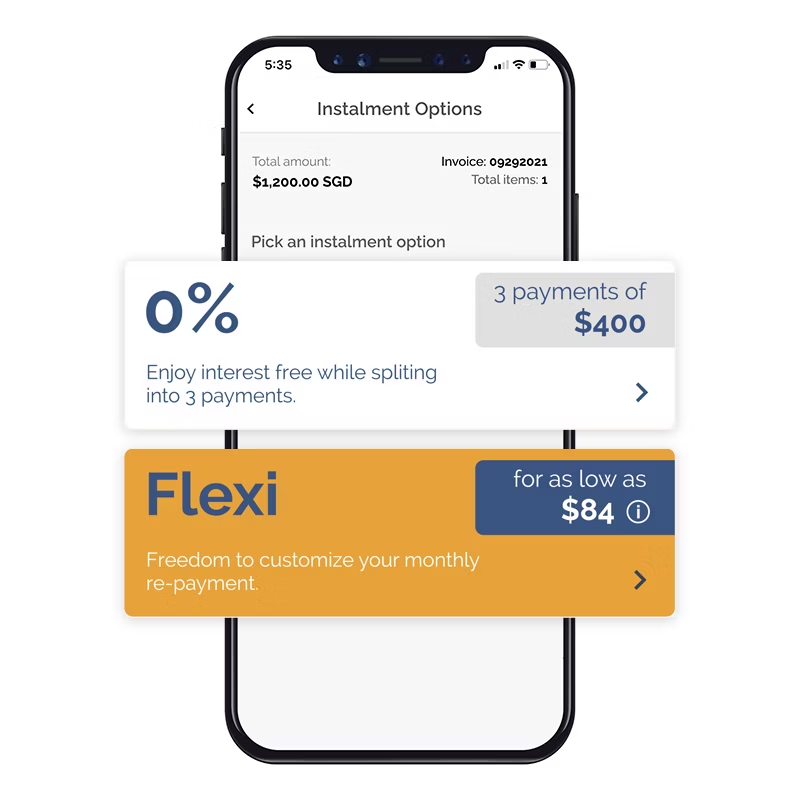
    1. Buy Now Pay Later (BNPL) Services for Eco-Friendly Personal Mobility: BNPL services, such as Klarna, Afterpay, and Affirm, have gained popularity in recent years. They offer the option to split the cost into interest-free installments. Here’s what you should know:

    Advantages:

    • Easy and fast application process, often requiring minimal documentation.
    • No or low-interest installment plans, depending on the service and promotional offers.
    • Flexibility to spread payments over time without incurring high credit card interest rates.

    Considerations:

    • Late payment or missed installments may result in additional fees or interest charges.
    • BNPL services may require a credit check or impact your credit score.
    • Limited options for higher-priced eco-friendly personal mobility vehicles.

    When considering financing options for eco-friendly personal mobility, it’s essential to evaluate your financial situation and preferences. Loans offer structured repayment plans with lower interest rates, making them suitable for larger purchases. Credit cards provide convenience and flexibility, but interest rates can be higher. BNPL services offer interest-free installments but may have limitations on higher-priced vehicles.

    To make an informed decision, consider factors such as your credit history, interest rates, repayment terms, and the overall cost of financing. Assess your financial capabilities and choose an option that aligns with your budget and long-term financial goals.

    Remember, the ultimate goal is to adopt eco-friendly personal mobility while maintaining your financial well-being. By choosing the right financing option, you can enjoy the benefits of sustainable transportation while managing your payments responsibly.

  • The Future of Delivery Services: Bikes vs. Cars

    The Future of Delivery Services: Bikes vs. Cars

    Delivery services have become an integral part of our modern lifestyle, especially with the surge in e-commerce and online shopping. As the demand for convenient and efficient delivery continues to grow, businesses are exploring alternative modes of transportation to meet these needs. In this blog post, we will delve into the debate of bikes versus cars for the future of delivery services and explore the advantages and challenges associated with each option.

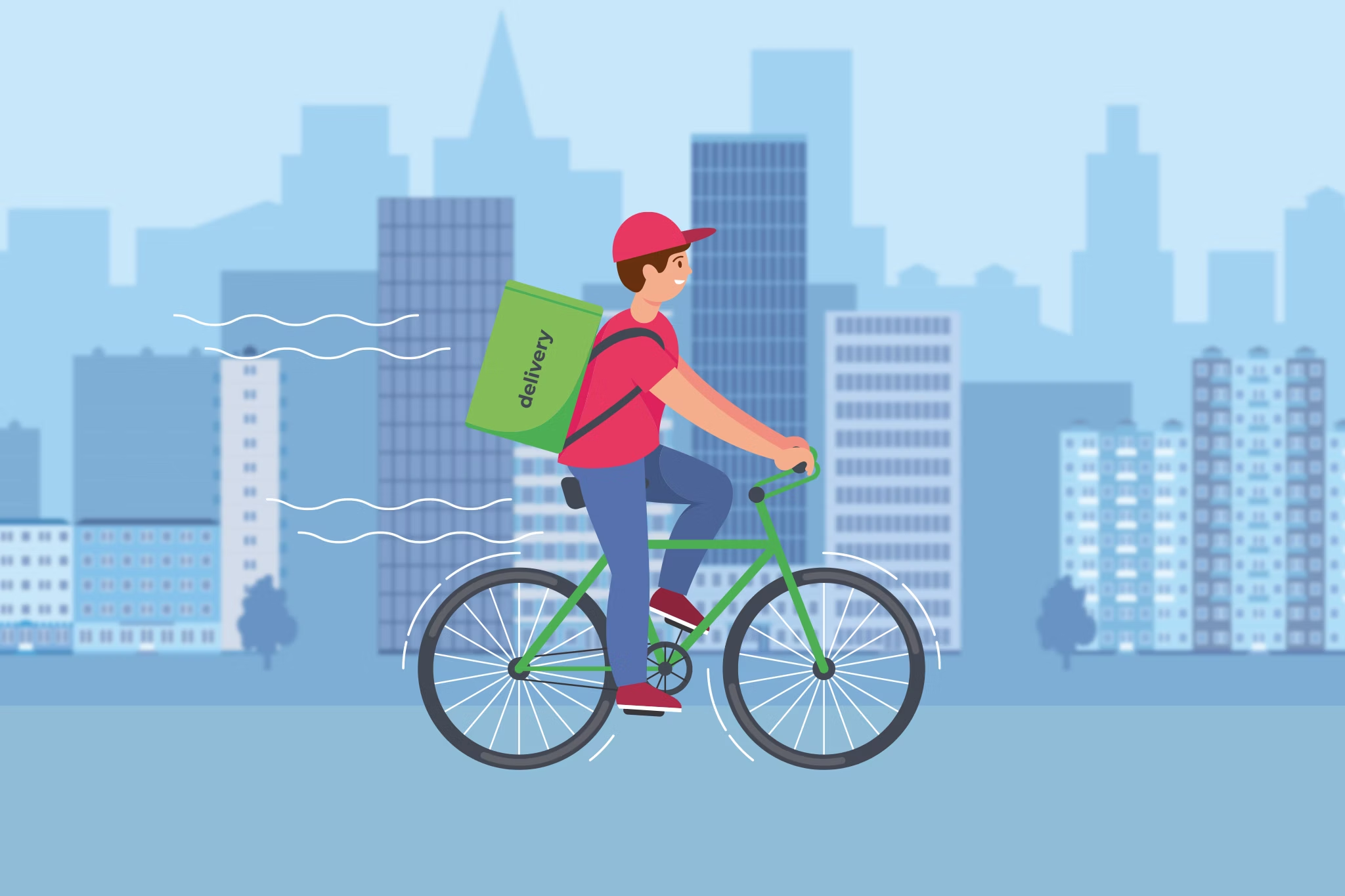
    The Rise of Bikes in Delivery Services: In recent years, bikes have gained significant popularity as a sustainable and efficient mode of transportation in urban areas. Here are some reasons why bikes have emerged as a viable option for delivery services:

    1. Environmental Sustainability: With increasing concerns about climate change and air pollution, using bikes for deliveries aligns with the global push for eco-friendly solutions. Bikes produce zero emissions, making them a greener alternative to cars that contribute to air pollution.
    2. Cost-Effectiveness: Operating and maintaining a fleet of cars can be expensive for delivery services. Bikes, on the other hand, are more affordable to purchase, require less maintenance, and incur minimal fuel costs, resulting in potential long-term cost savings.
    3. Maneuverability in Congested Areas: Urban areas often suffer from traffic congestion, making it challenging for cars to navigate through narrow streets and reach their destinations promptly. Bikes, with their agility and ability to weave through traffic, offer a faster and more efficient option, particularly in densely populated areas.
    4. Last-Mile Delivery: Bikes excel in last-mile deliveries, which involve transporting packages from a central hub or a nearby location to the final destination. Their compact size allows for easier access to crowded neighborhoods, apartment complexes, and other challenging locations where cars may face limitations.
    5. Positive Brand Image: Embracing bike delivery services can help businesses cultivate a positive brand image, showcasing their commitment to sustainability and social responsibility. This can resonate with environmentally conscious consumers who prioritize supporting eco-friendly initiatives.

    The Continued Relevance of Cars in Delivery Services: While bikes offer numerous advantages, it is important to acknowledge that cars still hold value in certain delivery scenarios. Here’s why cars remain relevant:

    1. Capacity for Bulk Deliveries: Cars and vans provide ample space to transport larger, bulkier items that may be impractical for bikes. For businesses that handle substantial or specialized goods, cars are essential to meet these specific delivery requirements.
    2. Long-Distance Deliveries: Bikes are well-suited for shorter distances, such as urban deliveries. However, for long-haul or intercity transportation, cars are more efficient due to their higher speeds and ability to cover greater distances in less time.
    3. Adverse Weather Conditions: Bikes are susceptible to weather conditions, which may impact delivery timelines and the safety of riders. Cars offer a more reliable option during extreme weather events, ensuring that deliveries can still be fulfilled.
    4. Flexibility for Multi-Modal Operations: In some cases, a combination of bikes and cars can be the optimal solution. Businesses can leverage the strengths of each mode, utilizing bikes for local deliveries and cars for longer or more demanding routes, creating a versatile and adaptable delivery network.

    As we look ahead, the future of delivery services is likely to witness a significant shift towards incorporating bikes into the delivery ecosystem. Their environmental sustainability, cost-effectiveness, and maneuverability make them a compelling choice. However, cars will continue to play a crucial role in certain delivery scenarios that require greater capacity, long-distance transport, and adaptability to adverse conditions. Striking a balance between bikes and cars, and perhaps exploring hybrid solutions, can pave the way for a more efficient, sustainable, and customer-centric delivery landscape.

    By embracing the strengths of both bikes and cars, delivery services can unlock new possibilities, enhance customer experiences, and contribute to a greener future. Whether it’s the nimbleness of bikes or the versatility of cars, the key lies in adapting to evolving customer demands and optimizing delivery operations for maximum efficiency and customer satisfaction.

  • The Importance of Financing Options for Underbanked Communities in Accessing Eco-Friendly Personal Mobility

    The Importance of Financing Options for Underbanked Communities in Accessing Eco-Friendly Personal Mobility

    As the world becomes more aware of the impact of climate change, the demand for eco-friendly personal mobility options such as e-bikes, electric scooters, and other forms of sustainable transportation has increased. However, for many underbanked individuals and communities, accessing these options can be a significant financial challenge. That’s why it’s important to consider the role of financing options in making eco-friendly personal mobility accessible to everyone.

    First and foremost, it’s important to understand what is meant by “underbanked.” This term refers to individuals or communities that have limited access to traditional banking services, such as savings accounts, credit cards, or loans. In many cases, these individuals may rely on alternative financial services such as check-cashing services, payday loans, or other forms of high-interest borrowing.

    For underbanked individuals, accessing eco-friendly personal mobility options may be particularly challenging due to the high upfront costs associated with purchasing or leasing these vehicles. However, there are a growing number of financing options available specifically for eco-friendly personal mobility, such as bike loans or lease-to-own programs. These programs can help make sustainable transportation options more accessible to underbanked individuals and communities.

    One example of a company working to provide financing options for eco-friendly personal mobility is fundbox. They offer easy and accessible financing for eco-friendly personal mobility vehicles, helping to break down the financial barriers that may prevent underbanked individuals from accessing these options. By providing financing that is tailored to the needs and circumstances of these communities, fundbox is helping to make sustainable transportation more accessible and equitable.

    Beyond the practical benefits of financing options for underbanked communities, there are also ethical considerations to take into account. Climate change and environmental degradation disproportionately affect marginalized communities, such as low-income or minority populations. By providing financing options that make eco-friendly personal mobility accessible to these communities, we can help address these inequalities and promote environmental justice.

    Furthermore, sustainable transportation options can have a range of other benefits for underbanked communities beyond environmental impact. For example, e-bikes and other forms of personal mobility can provide affordable and convenient transportation options for individuals who may not have access to a car or reliable public transportation. This can help promote economic mobility and independence, as well as improve overall quality of life.

    In conclusion, the importance of financing options for underbanked communities in accessing eco-friendly personal mobility cannot be overstated. By providing tailored financing options, we can help break down the financial barriers that may prevent these communities from accessing sustainable transportation options. This not only promotes environmental sustainability but can also have broader social and economic benefits for these communities. As we work towards a more sustainable and equitable future, ensuring that everyone has access to eco-friendly personal mobility must be a top priority.

  • The Role of E-bikes in the Gig Economy

    The Role of E-bikes in the Gig Economy

    The gig economy has revolutionized the way we work and how we access goods and services. From ride-sharing to food delivery, gig workers have become an essential part of the modern economy. One trend that has emerged in recent years is the use of e-bikes for gig work. In this article, we’ll take a closer look at the role of e-bikes in the gig economy.

    E-bikes have become an increasingly popular choice for gig workers, particularly those who work in the food delivery industry. One of the main advantages of e-bikes is their speed and efficiency. With electric assistance, riders can cover greater distances and make more deliveries in less time than they would on a traditional bicycle. This can translate into higher earnings for gig workers, who are often paid based on the number of deliveries they make.

    Another advantage of e-bikes is their versatility. Unlike cars or motorcycles, e-bikes can navigate through crowded city streets and easily maneuver around obstacles like traffic jams and road closures. This can be particularly useful for gig workers who need to make deliveries in dense urban areas where parking is limited and traffic congestion is common.

    In addition to being efficient and versatile, e-bikes are also an environmentally friendly alternative to traditional delivery vehicles. With zero emissions, e-bikes can help reduce air pollution and traffic congestion, making cities cleaner and more livable for everyone. This has become an increasingly important consideration for consumers who are looking for sustainable and responsible delivery options.

    However, there are also some challenges associated with using e-bikes for gig work. One of the main challenges is the cost of e-bikes. While e-bikes can be more cost-effective than traditional delivery vehicles in the long run, they do require a significant upfront investment. This can be a barrier to entry for some gig workers, particularly those who are just starting out or who have limited access to capital.

    One finance company that has recognized the potential of e-bikes in the gig economy is Fundbox. Fundbox is a fintech startup that provides easy and highly accessible financing for eco-friendly personal mobility, including e-bikes and other forms of sustainable transportation. The company’s mission is to help those who are underbanked and underserved by traditional financial institutions, including individuals who work in the gig economy.

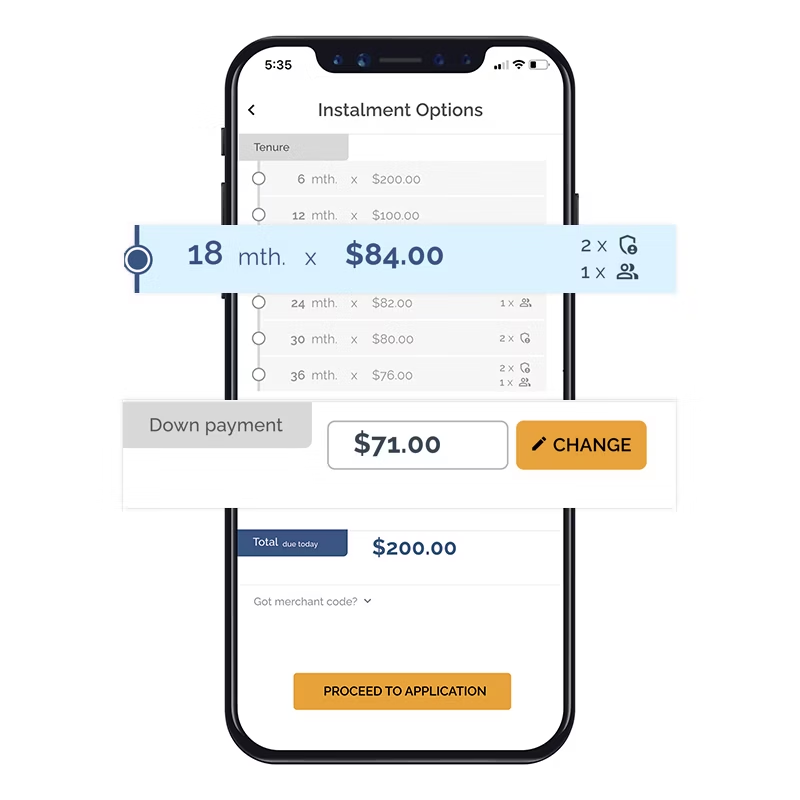
    Fundbox offers a range of financing options to help individuals purchase e-bikes, with repayment terms that are flexible and tailored to each borrower’s needs. The company’s online platform allows borrowers to apply for financing quickly and easily, with decisions typically made within minutes. Fundbox is committed to helping individuals who work in the gig economy access the financing they need to invest in sustainable transportation options and grow their businesses.

    By providing financing for e-bikes and other sustainable transportation options, Fundbox is helping to promote the growth of the gig economy while also supporting the shift towards a more sustainable and eco-friendly transportation system. As more individuals turn to gig work and embrace alternative modes of transportation, companies like Fundbox will continue to play an important role in supporting this growing sector of the economy.

  • The Pros and Cons of Using Buy Now Pay Later Services

    The Pros and Cons of Using Buy Now Pay Later Services

    Buy now pay later (BNPL) services have become increasingly popular in recent years, offering consumers a convenient and flexible way to make purchases. However, as with any financial product, there are both pros and cons to using BNPL services. In this article, we’ll take a closer look at the advantages and disadvantages of using BNPL.

    Pros:

    1. Flexibility – One of the biggest advantages of BNPL is the flexibility it offers. Consumers can choose to pay for their purchases over a period of time, rather than all at once. This can be particularly useful for larger purchases, such as electronics or appliances, that might otherwise be too expensive to pay for in full.
    2. Convenience – BNPL services are often very easy to use, with many providers offering simple online sign-up and payment processes. This can make it a convenient option for consumers who are looking to make purchases quickly and easily.
    3. No interest – Many BNPL services offer interest-free repayment plans, which can be an attractive option for consumers who want to avoid accruing interest charges on their purchases.
    4. Credit building – For consumers with limited credit histories, using BNPL services can be a good way to establish credit. By making on-time payments, consumers can demonstrate their creditworthiness and build a positive credit history.

    Cons:

    1. High fees – While some BNPL services offer interest-free repayment plans, others charge high fees or interest rates. This can result in significantly higher costs for consumers, particularly if they are unable to pay off their purchases within the designated timeframe.
    2. Debt accumulation – BNPL services can make it easy for consumers to accumulate debt, particularly if they use these services frequently or for larger purchases. This can lead to financial difficulties and stress, particularly if consumers are unable to make their payments on time.
    3. Limited protection – Unlike credit cards, BNPL services do not offer the same level of protection for consumers. For example, if a consumer’s BNPL provider goes out of business or experiences a data breach, they may not be able to recover their funds or protect their personal information.
    4. Temptation to overspend – Because BNPL services offer the flexibility to make purchases without paying for them upfront, consumers may be more tempted to overspend or make purchases that they cannot afford. This can lead to financial stress and difficulty making payments later on.

    In conclusion, there are both pros and cons in using buy now pay later services. While these services can offer flexibility and convenience, they can also result in higher costs, debt accumulation, and limited protection for consumers. Ultimately, it’s important for consumers to carefully consider their options and use BNPL services responsibly and in a way that aligns with their overall financial goals and circumstances.

  • The Future of BNPL: Trends to Watch

    The Future of BNPL: Trends to Watch

    Buy now pay later (BNPL) services have grown rapidly in popularity in recent years, providing consumers with a flexible payment option for purchases. As the industry continues to evolve, it’s worth taking a closer look at the trends that are shaping the future of BNPL.

    One major trend to watch is the expansion of BNPL services into new markets and industries. While these services were initially popular in the retail and e-commerce sectors, they are now being offered by a wide range of businesses, from healthcare providers to travel companies. As more industries adopt BNPL, it’s likely that these services will become even more ubiquitous and mainstream.

    Another trend that is expected to shape the future of BNPL is the increased use of data analytics and artificial intelligence. These technologies can help lenders better understand consumer behavior and creditworthiness, leading to more accurate and personalized lending decisions. This, in turn, can help reduce the risk of defaults and improve the overall efficiency of BNPL services.

    In addition, some experts predict that BNPL services will become more integrated into the overall payment ecosystem. This could include greater interoperability between different BNPL platforms, as well as more partnerships and collaborations between BNPL providers and other payment providers. As these services become more integrated, it’s likely that consumers will have even more options for managing their payments and purchases.

    Another trend that is expected to continue is the focus on sustainability and ethical lending practices. Many BNPL providers are now offering more environmentally-friendly options, such as carbon offset programs or incentives for sustainable purchases. Additionally, there is growing pressure for lenders to adopt responsible lending practices, such as conducting affordability checks and providing transparent and easy-to-understand terms and conditions.

    Finally, it’s worth noting that the regulatory environment around BNPL services is also likely to evolve in the coming years. As these services become more popular, regulators are likely to take a closer look at the potential risks and benefits, and may introduce new regulations to ensure that consumers are protected. This could include requirements for lenders to conduct affordability checks or to provide clear and transparent information to consumers about the costs and risks of using BNPL services.

    In conclusion, the future of BNPL is likely to be shaped by a variety of trends, including the expansion into new markets, the use of data analytics and artificial intelligence, increased integration into the overall payment ecosystem, a focus on sustainability and ethical lending practices, and evolving regulations. As these services continue to grow and evolve, it’s important for consumers to stay informed and to use BNPL services in a responsible and sustainable way. By doing so, they can take advantage of the flexibility and convenience offered by these services while minimizing the potential risks and costs.

  • Consumer Debt: A Closer Look

    Consumer Debt: A Closer Look

    Buy now pay later services have become increasingly popular in recent years, providing consumers with the option to make purchases and pay for them over time, often with little or no interest. While these services can be convenient for consumers, they also come with the potential risk of increased consumer debt.

    One of the primary concerns with buy now pay later services is the potential for consumers to accumulate debt that they may not be able to afford to repay. These services often allow consumers to make purchases with little or no money down, which can be tempting for those on a tight budget or living paycheck to paycheck. However, failing to make payments on time can result in penalties, fees, and interest charges that can quickly add up and make it difficult for consumers to pay off their balance.

    In addition, buy now pay later services can also make it easier for consumers to overspend, as they may not feel the immediate impact of their purchases on their bank account. This can lead to a false sense of financial security and result in consumers making purchases that they may not be able to afford in the long run.

    To address these concerns, some experts have called for increased regulation of buy now pay later services. This could include requirements for lenders to conduct affordability checks before offering credit, as well as transparency in the terms and conditions of such services. Additionally, consumers should be educated about the potential risks and benefits of using buy now pay later services, and encouraged to consider alternative payment options if they are concerned about accumulating debt.

    Another potential solution is for consumers to take a more proactive approach to managing their debt when using buy now pay later services. This could include setting a budget and sticking to it, avoiding making purchases that they cannot afford, and making payments on time and in full. By taking these steps, consumers can help minimize the risk of accumulating debt and ensure that they are using buy now pay later services in a responsible and sustainable way.

    It’s also important for consumers to be aware of their rights under relevant consumer protection laws. For example, they may have the right to dispute charges, request refunds, or file complaints if they feel that their rights have been violated. Additionally, consumers should carefully review the terms and conditions of any buy now pay later service they are considering using, and seek guidance from a financial professional if they have any concerns.

    In conclusion, buy now pay later services can be a convenient way for consumers to make purchases and manage their finances. However, they also come with the potential risk of increased consumer debt if not used responsibly. By taking a proactive approach to managing their debt, staying informed about their rights and options, and considering alternative payment methods if necessary, consumers can help ensure that they are using buy now pay later services in a way that is both convenient and sustainable for their financial situation.

  • The Legal Implications of Buy Now Pay Later Services for Retailers and Consumers

    The Legal Implications of Buy Now Pay Later Services for Retailers and Consumers

    Buy now pay later services have become increasingly popular in recent years, allowing consumers to make purchases and pay for them over time, often with little or no interest. While these services can be convenient for consumers, they also come with legal implications for both retailers and consumers.

    For retailers, there are several legal considerations to keep in mind when offering buy now pay later services. First and foremost, it’s important to ensure that all terms and conditions are clearly stated and easily accessible to consumers. This includes information about interest rates, fees, and repayment schedules, as well as any penalties for missed payments or late fees. Failing to disclose these details could result in legal action, fines, or damage to the retailer’s reputation.

    In addition, retailers must ensure that their buy now pay later services comply with all relevant consumer protection laws. This includes regulations related to privacy, data protection, and fair lending practices. For example, retailers may be required to obtain consent from consumers before collecting or using their personal information, or to provide transparent information about how such information will be used.

    Retailers may also face legal challenges related to debt collection, especially if consumers fail to make timely payments on their buy now pay later purchases. In such cases, retailers may need to pursue legal action in order to recover the debt owed. However, they must do so in a way that complies with all relevant laws and regulations, including those related to debt collection practices.

    For consumers, there are also legal implications to consider when using buy now pay later services. One of the biggest concerns is the potential for hidden fees and interest rates that may not be immediately apparent. In some cases, consumers may be charged exorbitant fees or interest rates if they miss payments or fail to pay off their balance within a certain period of time.

    Consumers should also be aware of their rights under relevant consumer protection laws, including those related to privacy, data protection, and fair lending practices. For example, consumers may have the right to dispute charges, request refunds, or file complaints if they feel that their rights have been violated.

    Another important legal consideration for consumers is the potential impact of buy now pay later services on their credit score. While some services may not report to credit bureaus, others may do so, which could have an impact on a consumer’s creditworthiness and ability to obtain credit in the future. Consumers should carefully consider the potential impact of buy now pay later services on their credit score before using them.

    Overall, buy now pay later services can be a convenient way for consumers to make purchases and manage their finances. However, both retailers and consumers must be aware of the legal implications associated with these services. By staying informed and complying with all relevant laws and regulations, retailers and consumers can minimize the risk of legal challenges and ensure that their buy now pay later transactions are safe, secure, and beneficial for all parties involved.

  • KEIND Christmas Gathering: Connecting Entrepreneurs and Seeking Partnerships in the Face of Uncertainty

    KEIND Christmas Gathering: Connecting Entrepreneurs and Seeking Partnerships in the Face of Uncertainty

    The Chamber of Entrepreneur Indonesia (KEIND) held its annual Christmas gathering on December 13, 2022 at the APL building in Jakarta. The event brought together influential entrepreneurs from across the country, including Jacki Ng, CEO of Fundbox, who was there to meet potential partners and distributors for electric bicycles and e-motorcycles.

    The KEIND Christmas gathering provided a valuable opportunity for Jacki Ng, CEO of Fundbox, to connect with potential partners and distributors in Indonesia as the company looks to expand its business in Southeast Asia. As electric bicycles and e-motorcycles become increasingly popular in the region, the gathering served as a platform for Fundbox to explore potential partnerships and opportunities to further its presence in the market. The gathering was an important step in Fundbox’s efforts to grow its business and establish itself as a leader in the emerging market for sustainable transportation options in Southeast Asia.

    The theme of the KEIND Christmas gathering, “The Certain Promise in The Uncertainty,” served as a reminder of the resilience and determination characteristic of the entrepreneurial spirit and provided hope and optimism for the year ahead. The gathering also provided a space for attendees to discuss the future of mobility and sustainability, as electric bicycles and e-motorcycles are becoming increasingly popular as environmentally-friendly transportation options. In his remarks at the KEIND Christmas gathering, Jacki Ng, CEO of Fundbox, emphasized the importance of maintaining a positive attitude and perspective in uncertain times “In uncertain times, it’s easy to focus on wins and losses. But with a good spirit, we can shift our perspective and recognize that the journey itself is what helps us become better leaders, regardless of the outcome. At the very least, it makes us more humble as individuals.”

    The gathering began with a high tea and photo session, allowing attendees to network and get to know each other. KEIND’s Chairman, Mr Afda Rizal Armashita, and Vice Chairman, Mr Tritan Saputra, delivered welcome speeches emphasizing the importance of coming together as a community during the holiday season, particularly in light of the challenges faced by businesses in the past year.

    Ir. Christian Kartawijaya, CEO of Indocement, delivered the Christmas message, highlighting the role entrepreneurs play in driving innovation and economic growth. He encouraged attendees to continue striving for success in the coming year.

    Pastor Dr. Hendra G. Mulia led a Christmas reflection, emphasizing the message of hope and love at the heart of the holiday season and encouraging attendees to embrace values of compassion, generosity, and forgiveness.

    The event concluded with a dinner featuring festive decorations and music, creating a warm and welcoming atmosphere for all attendees.

  • Holiday is coming! Is your pocket ready?

    Holiday is coming! Is your pocket ready?

    The holiday season is quickly approaching, and many people are already thinking about their holiday shopping. Whether you’re looking for gifts for your loved ones or planning to treat yourself, the holiday season is a great time to find deals and save money on the items you want. As you start to plan your holiday shopping, it’s important to consider all of your options and find the best payment option for your needs. One option to consider is buy now pay later (BNPL), which allows you to make your holiday purchases now and pay for them in installments at a later date. This can be a convenient and flexible way to manage your finances and avoid going into debt during the holiday season.

    As a consumer, there are many benefits to using buy now pay later (BNPL) as a payment option for your holiday shopping. BNPL allows you to make your holiday purchases now and pay for them in instalments at a later date, making it a convenient and flexible way to manage your finances. Here are some of the key benefits of using BNPL for your holiday shopping.

    • BNPL allows you to make your holiday purchases without having to pay the full amount upfront. This can be especially helpful if you are on a tight budget or if you do not have access to traditional forms of credit. By spreading the cost of your holiday purchases over a series of payments, you can avoid going into debt and manage your finances more easily.

    • BNPL can help you to save money on your holiday shopping. With BNPL, you can often get interest-free financing for your purchases, which means that you won’t have to pay any additional fees or charges. This can help you to save money compared to traditional forms of credit, where you may have to pay interest on your purchases.

    • BNPL can be a convenient way to manage your finances during the holiday season. With BNPL, you can see exactly how much you are paying each month and can plan your finances accordingly. This can be helpful if you are trying to stick to a budget or if you want to avoid overspending during the holidays.

    • BNPL can improve your credit score. When you make timely payments on your BNPL account, it can help to improve your credit score. This can be especially beneficial if you are trying to build your credit or if you have had trouble getting approved for traditional forms of credit.

    • BNPL can be a flexible payment option. With BNPL, you can choose the number and frequency of your payments, which means that you can tailor your payments to suit your needs and budget. This can be especially helpful if you have irregular income or if your financial situation changes over the holiday season.

    Overall, there are many benefits to using BNPL as a payment option for your holiday shopping. It allows you to make your holiday purchases without having to pay the full amount upfront, and it can help you to save money, manage your finances, and improve your credit score. Additionally, BNPL offers flexibility and convenience, making it a valuable option for many consumers during the holiday season.